
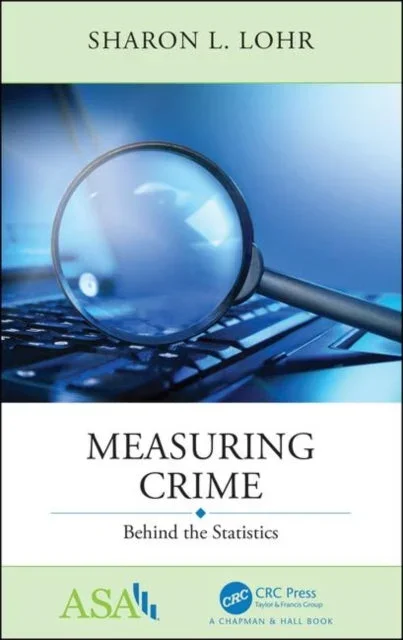
Description
The use of statistics in crime analysis helps law enforcement agencies identify patterns and trends in criminal behavior, which can aid in the development of more effective crime prevention and control strategies.
Crime statistics provide a statistical view of crime, promoting statistical reasoning and aiding law enforcement in developing effective crime prevention and control strategies.
n Format: Paperback / softback
n Length: 158 pages
n Publication date: 28 March 2019
n Publisher: Taylor & Francis Ltd
n
The collection, analysis, and presentation of crime statistics provide a valuable statistical perspective on the nature and extent of criminal activity in society. By compiling and analyzing data on a wide range of crime-related incidents, including arrests, convictions, and victimization, researchers and policymakers can gain insights into the patterns, trends, and factors that contribute to crime.
This statistical view of crime statistics is essential for promoting statistical reasoning and understanding among the general public. It helps individuals to critically evaluate the information they encounter and to make informed decisions based on evidence. Crime statistics can also be used to identify areas of concern and to develop targeted interventions and policies to address these issues.
One of the key benefits of crime statistics is that they provide a standardized way of measuring and comparing crime rates across different communities and regions. This allows for the identification of areas that may be experiencing higher levels of crime and the development of targeted strategies to address these problems.
However, collecting and analyzing crime statistics can also be challenging, as there are many factors that can influence crime rates, such as population density, economic conditions, and social factors. Additionally, there may be biases and errors in the data collection and analysis process, which can affect the accuracy and reliability of the statistics.
Despite these challenges, crime statistics remain an important tool for promoting public safety and understanding crime trends. By continuing to invest in research and data collection, policymakers and researchers can gain a deeper understanding of the factors that contribute to crime and develop effective strategies to address these issues.
In conclusion, the collection, analysis, and presentation of crime statistics provide a valuable statistical perspective on the nature and extent of criminal activity in society. By promoting statistical reasoning and understanding among the general public, crime statistics can help to identify areas of concern and develop targeted interventions and policies to address these issues. While there are challenges to collecting and analyzing crime statistics, continued investment in research and data collection is essential for promoting public safety and understanding crime trends.
n Weight: 246gn
Dimension: 213 x 133 x 9 (mm)n
ISBN-13: 9781138489073n n




Reviews
There are no reviews yet.